
3D-Bioprinting of bacterial biofilms on human lung cell monolayers as an in vitro model of a chronic lung infection
In vitro co cultures of human epithelial cells and bacteria are difficult to cultivate. We use the technology of 3D bioprinting to print bacterial biofilms reproducible and defined on human epithelial lung cells.
To fight lung infections, medical science explores disease progression and develops new anti-infectives and therapeutic approaches. Biofilm-forming bacteria present a major challenge for medicine. For patients with cystic fibrosis, these bacteria are a special threat, because they can colonize the thick and viscous mucus of these persons.
In the course of this research, animal experiments are still the standard model, despite of several known drawbacks. Usually, the “animal trial objects“ (rats, mouse, cats, cavies, pigs, monkeys) are infected with bacteria-loaded agar-beads via the intratracheal or intranasal route. However, such animal models are not just ethical but also scientifically questionable.
Advanced and in vivo like in vitro models could not just offer a simple substitute, but be an even better alternative to receive preclinical drug efficacy data of new anti-infectives. One major problem is however, that bacterial biofilms cannot be grown directly on human cells, because their rapid growth quickly kills the cells. In a new approach the bacterial biofilms are grown separately and transferred onto the cells. Still, with this method the biofilm can be transferred neither in a defined nor in a reproducible way.
Therefore, this project aims to bioprint bacterial biofilms in a hydrogel on human lung epithelial cells in a reproducible and defined manner (figure 1). Subsequently, the model is supposed to be used as a platform for the investigation of new anti-infectives.

Pseudomonas aeruginosa bacteria (e.g. PA14) will be grown in a printable hydrogel to form biofilm material. The biofilms will then be printed onto human lung epithelial cells. Afterwards, the model will be characterized with special regards to cell viability and barrier properties as well as cytokine release. The application of the model via treatment with suitable anti-infectives (e.g. Tobramycin, Colistin or QS-inhibitors) shall be demonstrated by observing changing barrier properties and cytokine releases.
Project management
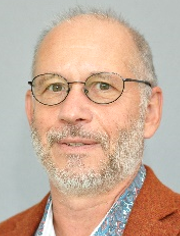
Prof. Dr. Claus-Michael Lehr
Promotion im Bereich biopharmazeutische Technologie am „Center for Bio-Pharmaceutical Science“ an der Leiden Universität in Niederlande. Postdoc an der USC in Kalifornien, Los Angeles. Research Associate am Leiden Center for Drug Research. Professor im Bereich pharmazeutische Technologie an der Philipps-Universität Marburg. Professor der Biopharmazie und Pharmazeutischer Technologie an der Universität des Saarlandes. Seit 2009 Leiter der Arbeitsgruppe Drug Delivery am Helmholtz-Institut für Pharmazeutische Forschung Saarland.
Cooperation
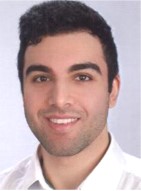
Samy Aliyazdi
Masterstudium in Biotechnologie an der Universität des Saarlandes. Seit 2019 Promotion an Helmholtz-Institut für Pharmazeutische Forschung Saarland in der Arbeitsgruppe Drug Delivery Across Biological Barriers.
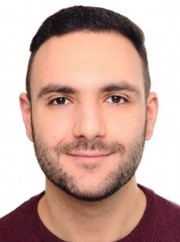
Aghiad Bali
Masterstudium in Biotechnologie an der Universität des Saarlandes. Seit 2021 Promotion an Helmholtz-Institut für Pharmazeutische Forschung Saarland in der Arbeitsgruppe Drug Delivery Across Biological Barriers.