
Optimisation of a future standard in vitro model of the human blood-brain barrier
At present, all in vitro models of the human blood-brain barrier based on primary brain cells or immortalised cells exhibit inadequate barrier properties.
The blood-brain barrier regulates the transport of substances between the bloodstream and the central nervous system (CNS). It acts as an active, bidirectional filtration system responsible for maintaining homeostasis in the CNS. The blood-brain barrier also helps to defend against viruses and bacteria. In many diseases (stroke, brain tumours, Alzheimer’s, epilepsy, multiple sclerosis, etc.), the blood-brain barrier is altered, and stabilising it can help to mitigate the course of the disease. Furthermore, it plays a very significant role in drug research and development. Many drugs cannot cross the blood-brain barrier because they are recognised as foreign, even though they are intended to reach the CNS for therapeutic purposes. On the other hand, many drugs that act in the periphery should not enter the CNS in order to prevent undesirable side effects. At present, all in vitro models of the human blood-brain barrier based on primary or immortalised brain endothelial cells exhibit inadequate barrier properties. Cells of the neurovascular units (NVE), such as astrocytes, pericytes and neural stem cells, can influence brain endothelial cell layers in such a way that they increasingly resemble the physiological state within the body. The shear forces exerted on endothelial cells by the flow of viscous blood can additionally induce blood-brain barrier properties. As an alternative to human primary or immortalised brain endothelial cells, models based on a wide variety of stem cell types have recently been proposed. The aim of this project was to optimise models based on a human induced pluripotent stem cell line (hiPS) that take into account the influences of the microenvironment. As part of the work, protocols were successfully established to generate brain endothelial cells (HE), astrocytes (AST), pericytes (PER) and neural stem cells (NS) from the hiPS. Using these cells, static Transwell models and dynamic flow reactors were developed and compared with models based on immortalised brain endothelial cells (see figure). The barrier properties were comprehensively characterised at both the functional and molecular levels (see Appelt-Menzel et al., Stem Cell Reports, 2017). It was demonstrated that NVE cells, on the one hand, improved the barrier properties of the models and, on the other hand, were essential for barrier breakdown in stroke models. The established dynamic flow reactors could be used for chronic long-term experiments spanning several weeks. The potential applications of stem cell-based blood-brain barrier models are extremely wide-ranging in both research and drug development, and have the potential to significantly reduce or, in future, replace the use of animal models and cells that must be isolated from animals, in line with the 3Rs principles (Refine/Reduce/Replace).
Publications:
W. Neuhaus (2017) “Human induced pluripotent stem cell (hiPSC) based in vitro models of the blood-brain barrier: The future standard ?” Neural Regeneration Research 12(10):1607-1609.
Masterarbeit Anna Sophia Wilhelm (2017) „Optimization of a human blood-brain barrier in vitro model - Investigation of the influence of dynamic flow-culture conditions and implementation of non-invasive impedance spectroscopy“, Julius-Maximilians-Universität Würzburg.
Masterarbeit Elsa Görsch (2017) „Optimization of Human Blood-Brain Barrier Models“, Julius- Maximilians-Universität Würzburg.
A. Appelt-Menzel, A. Cubukova, K. Gunther, F. Edenhofer, J. Piontek, G. Krause, T. Stuber, H. Walles, W. Neuhaus and M. Metzger (2017). "Establishment of a Human Blood-Brain Barrier Co-culture Model Mimicking the Neurovascular Unit Using Induced Pluri- and Multipotent Stem Cells." Stem Cell Reports 8(4): 894-906.
A. Appelt-Menzel, A. Cubukova and M. Metzger (2018). “Establishment of a human bloodbrain barrier co-culture model mimicking the neurovascular unit using induced pluripotent stem cells.” Current Protocols in Stem Cell Biology, 47, e62.
A. Ramme, L. Koenig, C. Schwenk, C. Magauer, D. Faust, A. Lorenz, A. Krebs, C. Drewell, K. Schirrmann, A. Vladetic, G. Lin, S. Pabinger, W. Neuhaus, F. Bois, R. Lauster, U. Marx, E. Dehne (2018) „Towards an autologous iPSC-derived patient-on-a-chip"; bioRxiv, 1, S. 1-26.
A. Ramme, L. Koenig, T. Hasenberg, C. Schwenk, C. Magauer, D. Faust, A. Lorenz, A. Krebs, C. Drewell, K. Schirrmann, A. Vladetic, G. Lin, S. Pabinger, W. Neuhaus, F. Bois, R. Lauser, U. Marx, E. Dehne (2019): "Autologous iPSC-derived four-organ-chip"; Future Science OA, 8, 5; S. 1 - 12.
Masterarbeit Nadja Pracser (2019) “The role of the microenvironment in a human blood-brain barrier in vitro model of ischemia", Universität Wien.
A Gerhartl, N Pracser, A Vladetic, S Hendrikx, HP Friedl & W Neuhaus (2020). The pivotal role of micro-environmental cells in a human blood–brain barrier in vitro model of cerebral ischemia: functional and transcriptomic analysis. Fluids Barriers CNS 17, 19.
A. Appelt-Menzel, S. Oerter, S. Mathew, U. Haferkamp, C. Hartmann, M. Jung, W. Neuhaus, O. Pless (2020). Human iPSC-Derived Blood-Brain Barrier Models: Valuable Tools for Preclinical Drug Discovery and Development? Curr Protoc Stem Cell Biol; 55(1):e122. doi: 10.1002/cpsc.122.
Project management
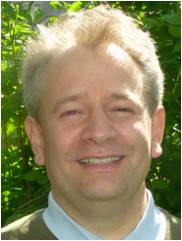
PD Dipl.-Ing. Dr. Winfried Neuhaus
Studium der Lebensmittel- und Biotechnologie an der Universität für Bodenkultur, Wien. Dissertation zur „Entwicklung und Validierung von Blut-Hirn-Schranken in-vitro-Modellen“. Universitätsassistent und Lecturer an der FH Biotechnologie, Wien, anschließend Forschungsgruppenleiter bei PharmaCon. 2010-2016 Forschung am Uniklinikum Würzburg, zeitgleich auch am Department für Pharmazeutische Chemie und am Institut für medizinische Genetik in Wien. Seit 2016 Arbeitsgruppenleiter am AIT.
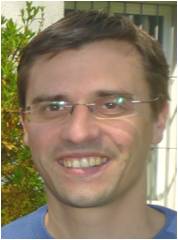
Dr. Marco Metzger
Studium der Biotechnologie an der Hochschule Mannheim. Ab 2002 Promotion an der Uni Tübingen zum „Einfluss des Repulsiven Guidance Moleküls (RGM) auf die Proliferation und Differenzierung intestinaler Stammzellen“. Post-Doc am Institute of Child Health des University College London (UK). 2009-2011 Aufbau einer BMBF-Nachwuchsgruppe am Translationszentrum für Regenerative Medizin auf, danach Gruppenleiter in der Projektgruppe Onkologie des Fraunhofer-Instituts für Grenzflächen- und Bioverfahrenstechnik (IGB) sowie des Lehrstuhls für Tissue Engineering & Regenerative Medizin (TERM) am Universitätsklinikum Würzburg. Seit 2014 Leitung der Abteilung ‚Implantate‘ am Translationszentrum Würzburg.
Cooperation
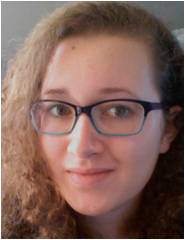
Anna Gerhartl, MSc.
Bachelorstudium in Oxford, Masterstudium Medical and Pharmaceutical Biotechnology an der FH Krems, Masterarbeit „Patient-derived iPSCs as a Tool for Modeling Cortical Migration Defects”. Doktorandin bei Winfried Neuhaus.
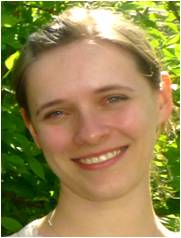
Dipl.-Ing. (FH) Antje Appelt-Menzel
Ingenieursstudium der Pharma-Biotechnologie in Jena. Diplomarbeit zur „Optimierung der Isolations- und Kultivierungsbedingungen von humanen Keratinozyten und Fibroblasten und Aufbau eines Hautäquivalents für eine automatisierte Herstellung“ am Fraunhofer IGB in Stuttgart. 2009-2012 Ingenieurin am Lehrstuhl für Tissue Engineering und Regenerative Medizin des Universitätsklinikums Würzburg. Dissertation zur „Etablierung und Qualifizierung eines humanen Blut-Hirn Schranken Modells unter Verwendung von induziert pluripotenten und multipotenten Stammzellen“ an. Post-doc bei Dr. Marco Metzger.