
Gene delivery to the lung in vitro – reducing the number of transgenic animals
New therapeutic approaches for the treatment of severe lung diseases (e.g. cystic fibrosis) are increasingly being tested on genetically modified laboratory animals. The relevance of such experiments for the human body is often questionable.
The project "Gene therapy of the lung in vitro - reducing the use of transgenic animals to a minimum" used human systems to investigate how gene therapy of the human lung can be simulated in vitro to reduce the use of animal experiments in this rapidly growing field of research.
To this end, various mechanisms such as particle deposition, uptake into the various lung cells and efficacy were mimicked. In addition to cell lines, primary alveolar cells from the human lung were also used for this purpose. Primary autologous coculture of the lower airways was of great importance for the investigation of new pulmonary formulations.
In the experimental setup, the upper airways were mimicked by the Calu-3 cell line, while the lower airways were simulated with primary alveolar lung cells and cocultures. The influence of macrophages in the lower airways or mucus from the upper airways on the efficacy of new forms of therapy was investigated.
The knowledge gained is immediately transferred between Saarland University, the Helmholtz Institute for Pharmaceutical Research and PharmBioTec GmbH. Research in the field of gene delivery is carried out at all locations so that new findings can be directly incorporated into similar work.
Publikations:
M. Hittinger et al., Cell and tissue-based in vitro models for improving the development of oral inhalation drug products, Eur. J. Pharm. Biopharm. (2017), http://dx.doi.org/10.1016/j.ejpb.2017.02.019
Vukosavljevic B, Hittinger M, Hachmeister H, Pilger C, Murgia X, Gepp MM, Gentile L, Huwer H, Schneider-Daum N, Huser T, Lehr CM, Windbergs M. Vibrational spectroscopic imaging and live cell video microscopy for studying differentiation of primary human alveolar epithelial cells. J Biophotonics. 2019 Jun;12(6):e201800052. doi: 10.1002/jbio.201800052. Epub 2019 Feb 20. PMID: 30597770.
Sapich S, Hittinger M, Hendrix-Jastrzebski R, et al. Murine Alveolar Epithelial Cells and Their Lentivirus-mediated Immortalisation. Alternatives to Laboratory Animals. 2018;46(2):73-89. doi:10.1177/026119291804600207
Project management

Marius Hittinger
Ph.D. student in the team of Prof. Claus Michael Lehr at the Helmholtz Institute for Pharmaceutical Research Saarland. In 2015 joined the research institute PharmBioTec where he continued his work focusing on new advanced pulmonary in vitro models.
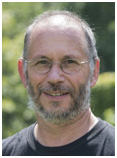
Prof. Dr. Claus-Michael Lehr
Studied pharmacy at the universities of Mainz and Hamburg. PhD thesis at Leiden University, Netherlands. Postdoc at the University of Southern California in Los Angeles, USA, in 1991, then at the Leiden/Amsterdam Centre for Drug Research, Netherlands. Professor for pharmaceutical technology at the Philipps University Marburg in 1993. Since 1995 head of department Biopharmaceutics and Pharmaceutical Technology at Saarland University in Saarbrücken. Engaged in the founding of the Across Barriers GmbH Saarbrücken in 1998, Co-founder of the Centre for Bioinformatics Saarbrücken in 2000, where he still is deputy director. Since 2009 leader of the department Drug Delivery of the Helmholtz Institute for Pharmaceutical Research Saarland (HIPS) and co-founder of the PharmaBioTec GmbH in Saarbrücken.
Cooperation

Birgit Wiegand
Technician at PharmBioTec GmbH. She worked for Boehringer and the Saarland University. Responsible for the cell culture lab and the preparation of experiments.